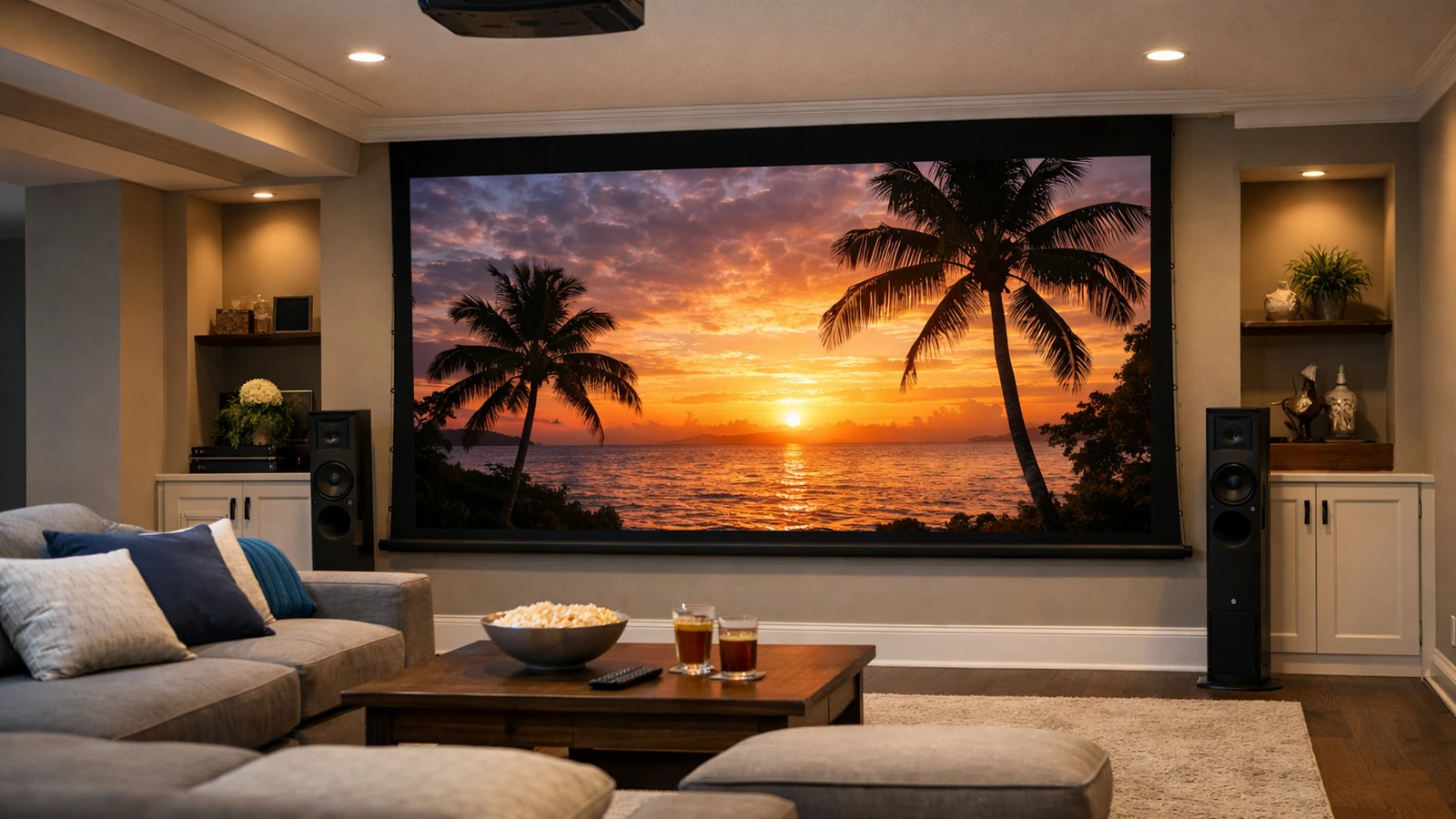
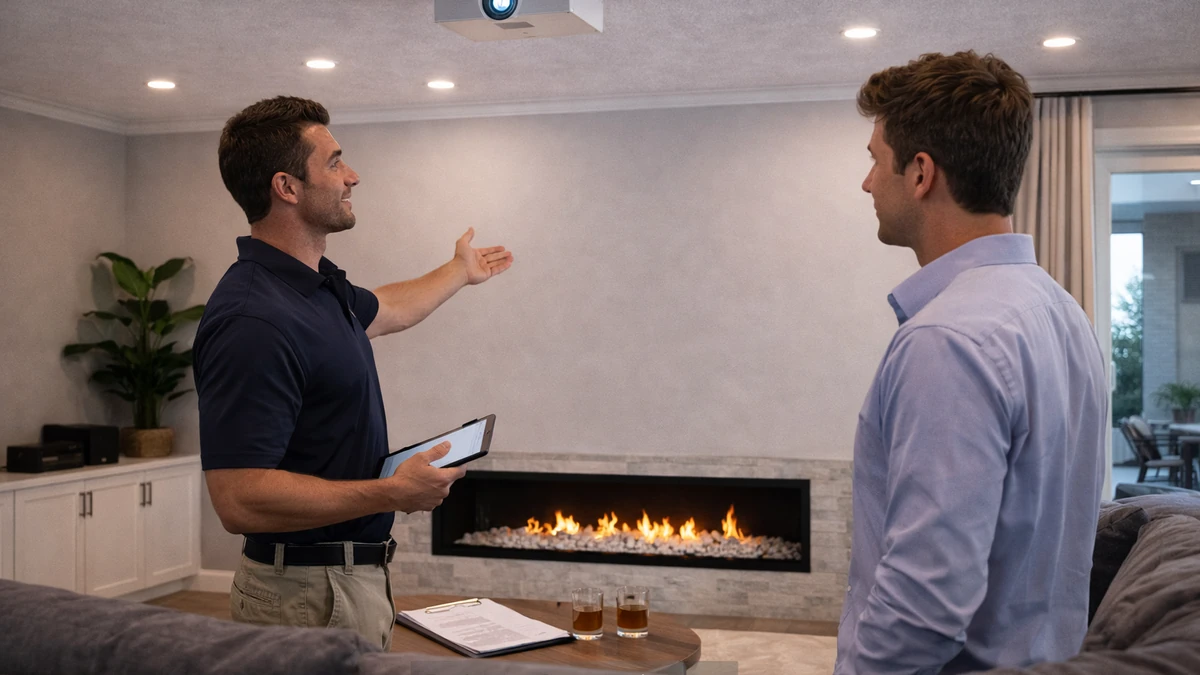
Projector screen installation should be planned like part of the room, not treated like an accessory
A projector screen project usually starts when the homeowner already knows they want a larger, cleaner viewing experience and needs help avoiding the wrong size, screen material, drop length, or screen style. The screen has to work with the projector, furniture layout, speakers, windows, and lighting conditions in the room, not just look good online. That is why a strong installation process has to begin with the way the space will be used, not with a random product recommendation.
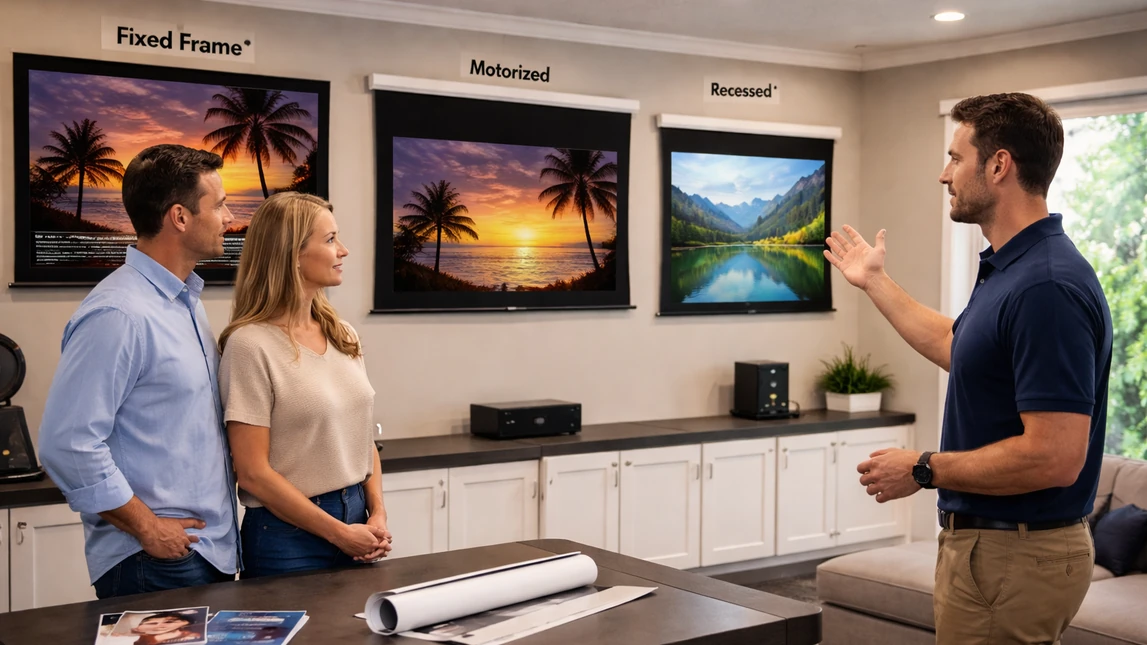
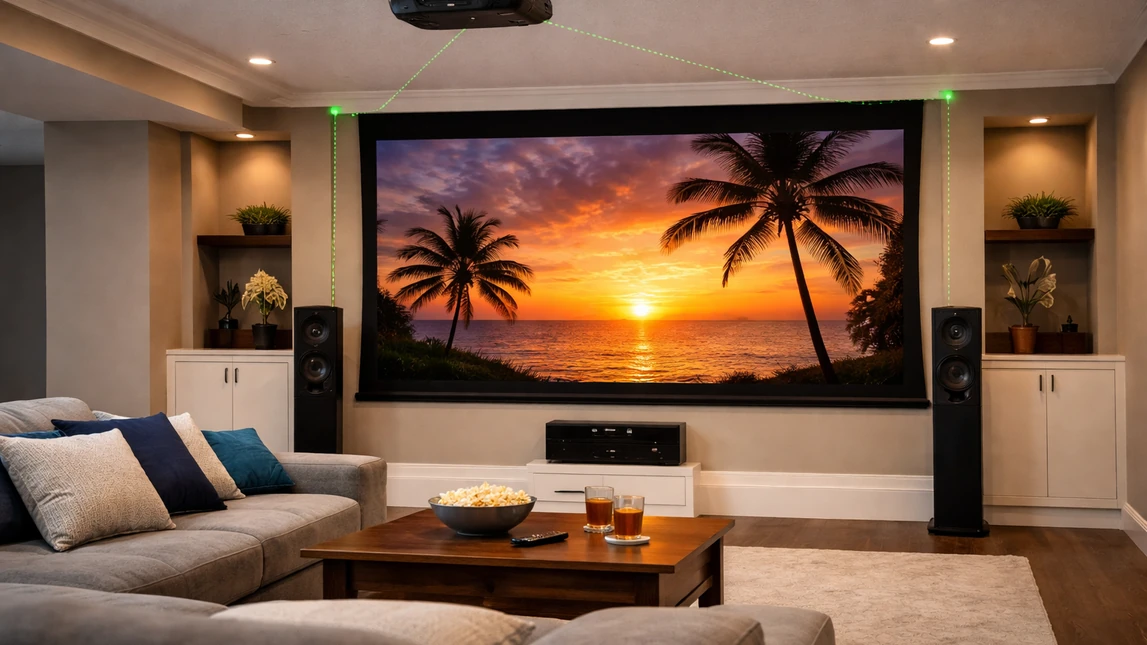
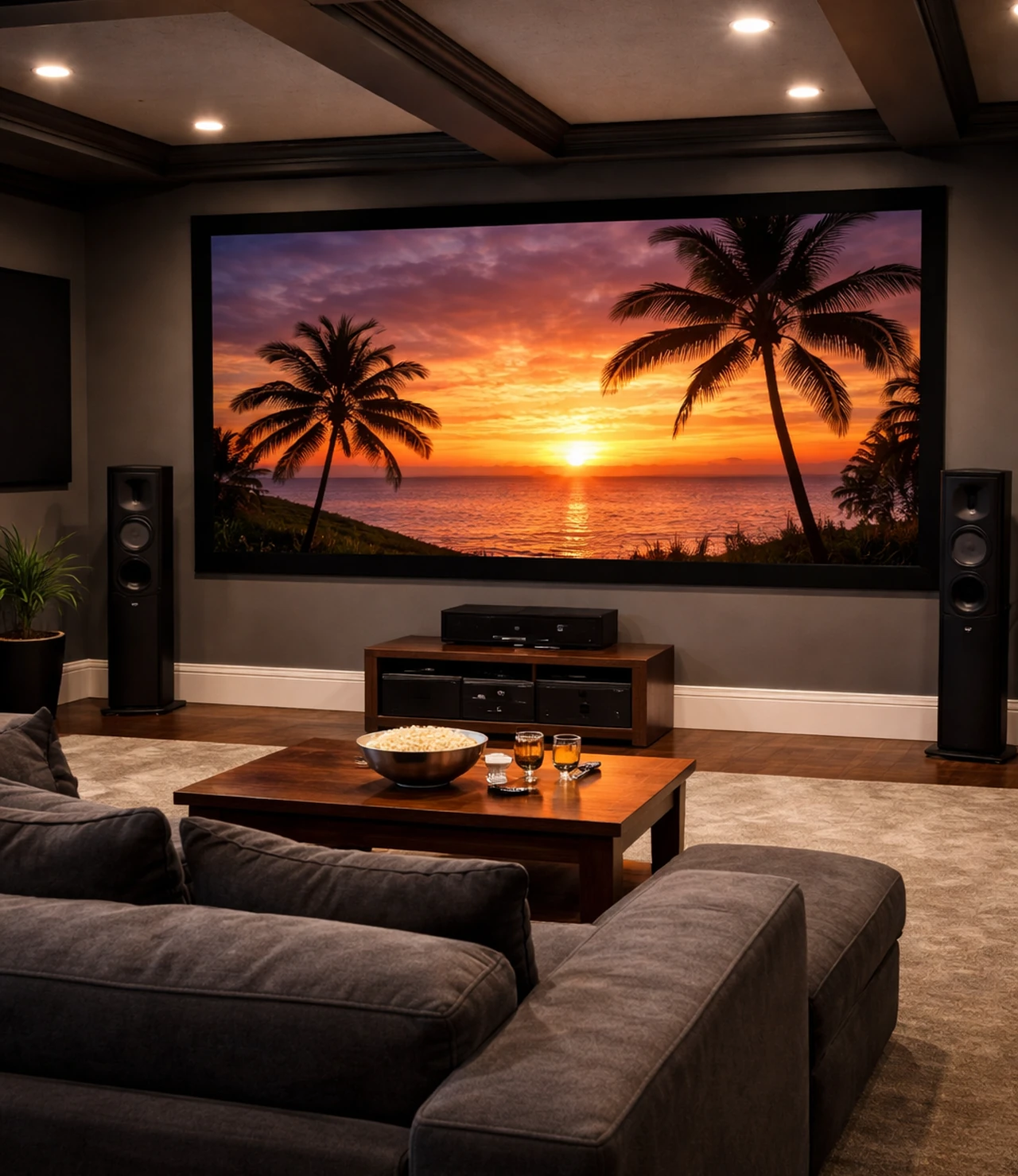
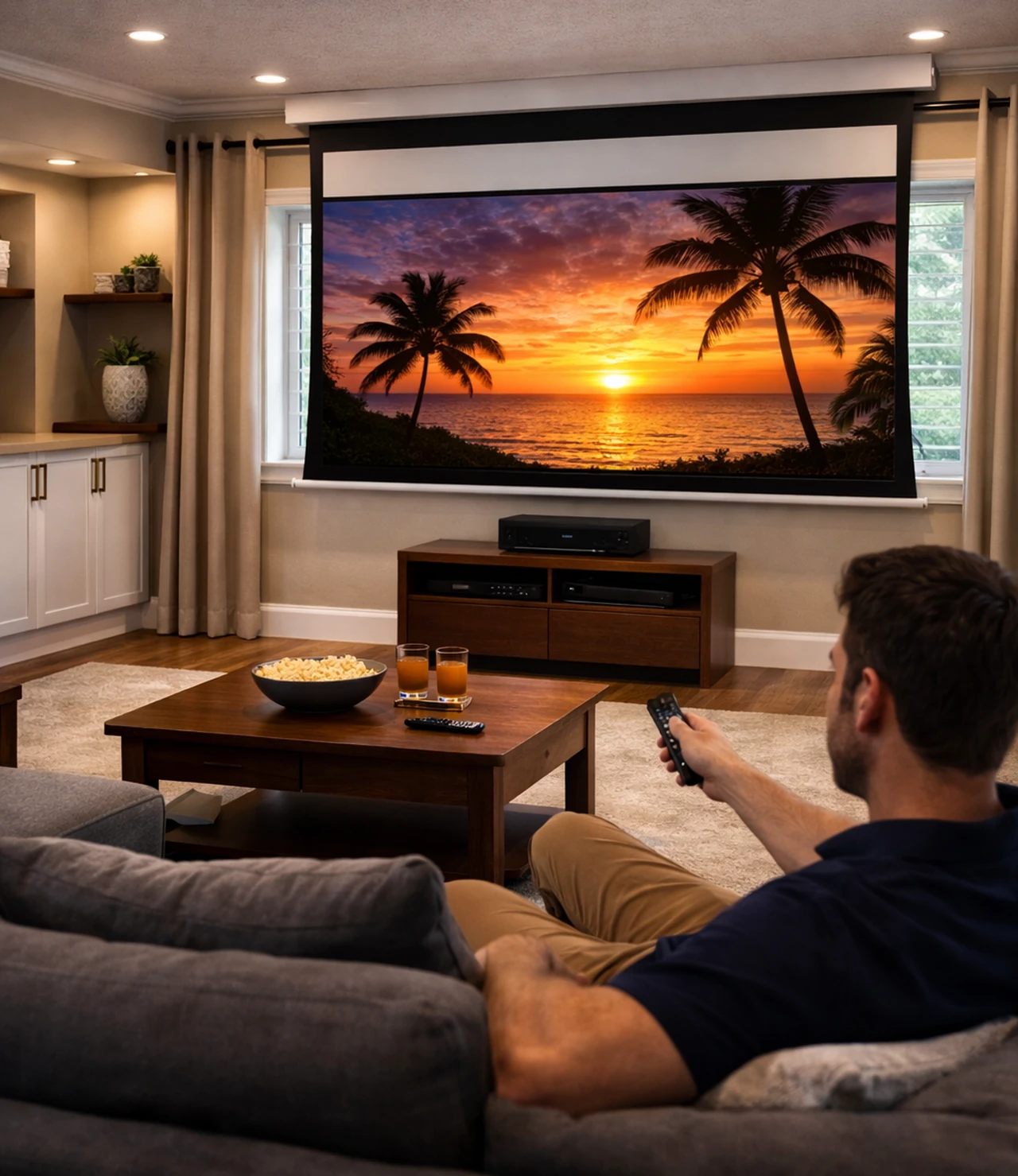
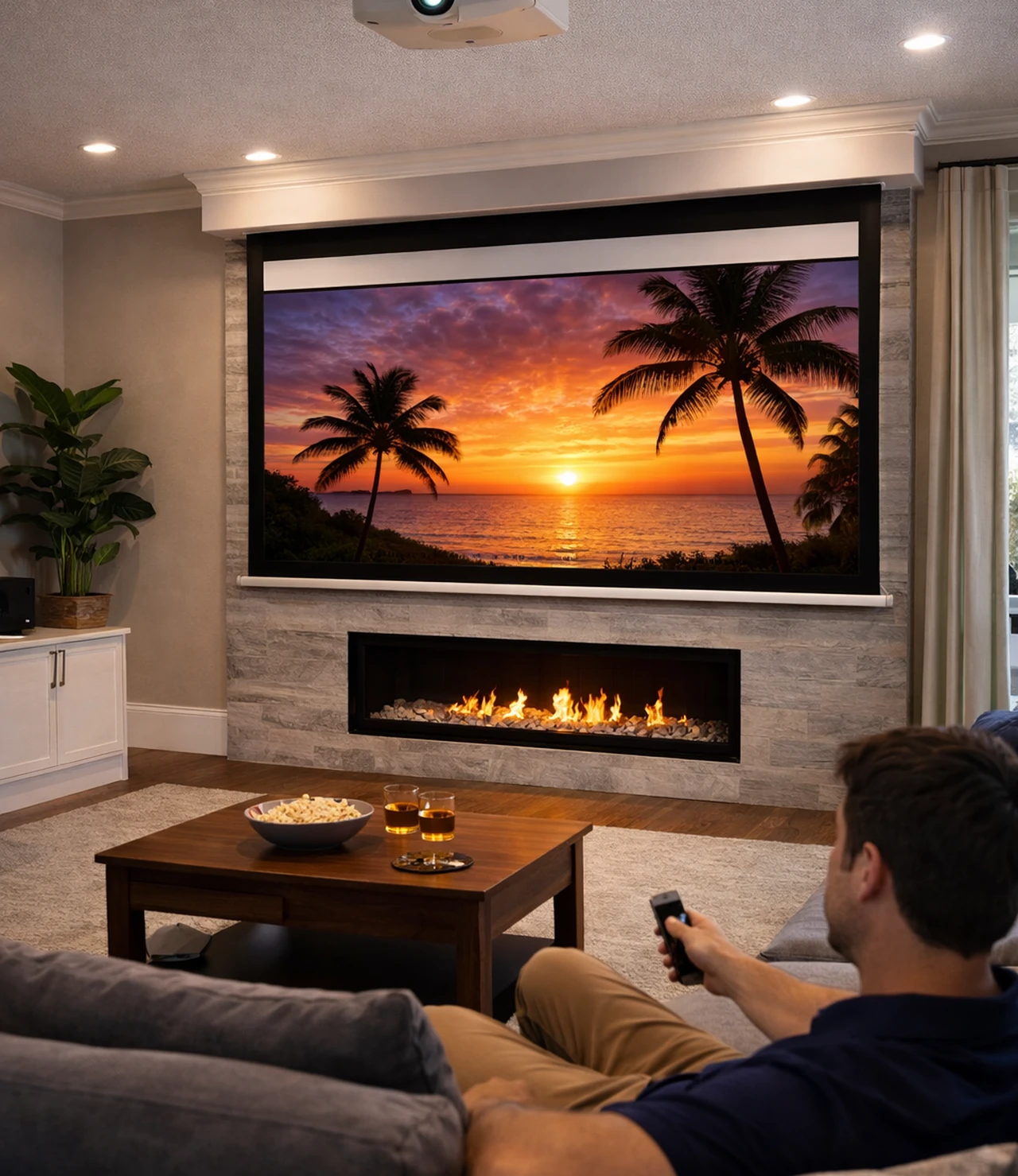
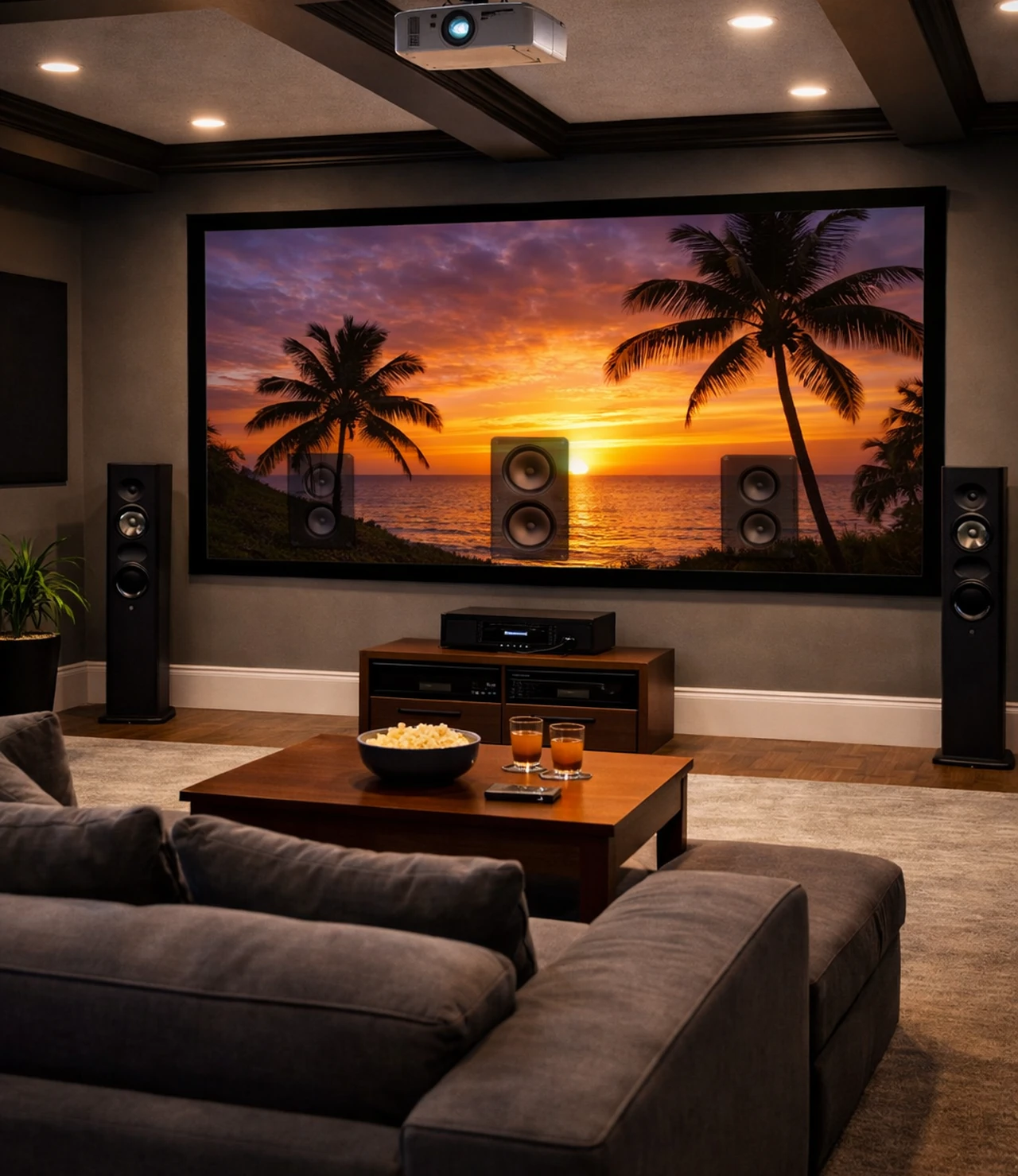
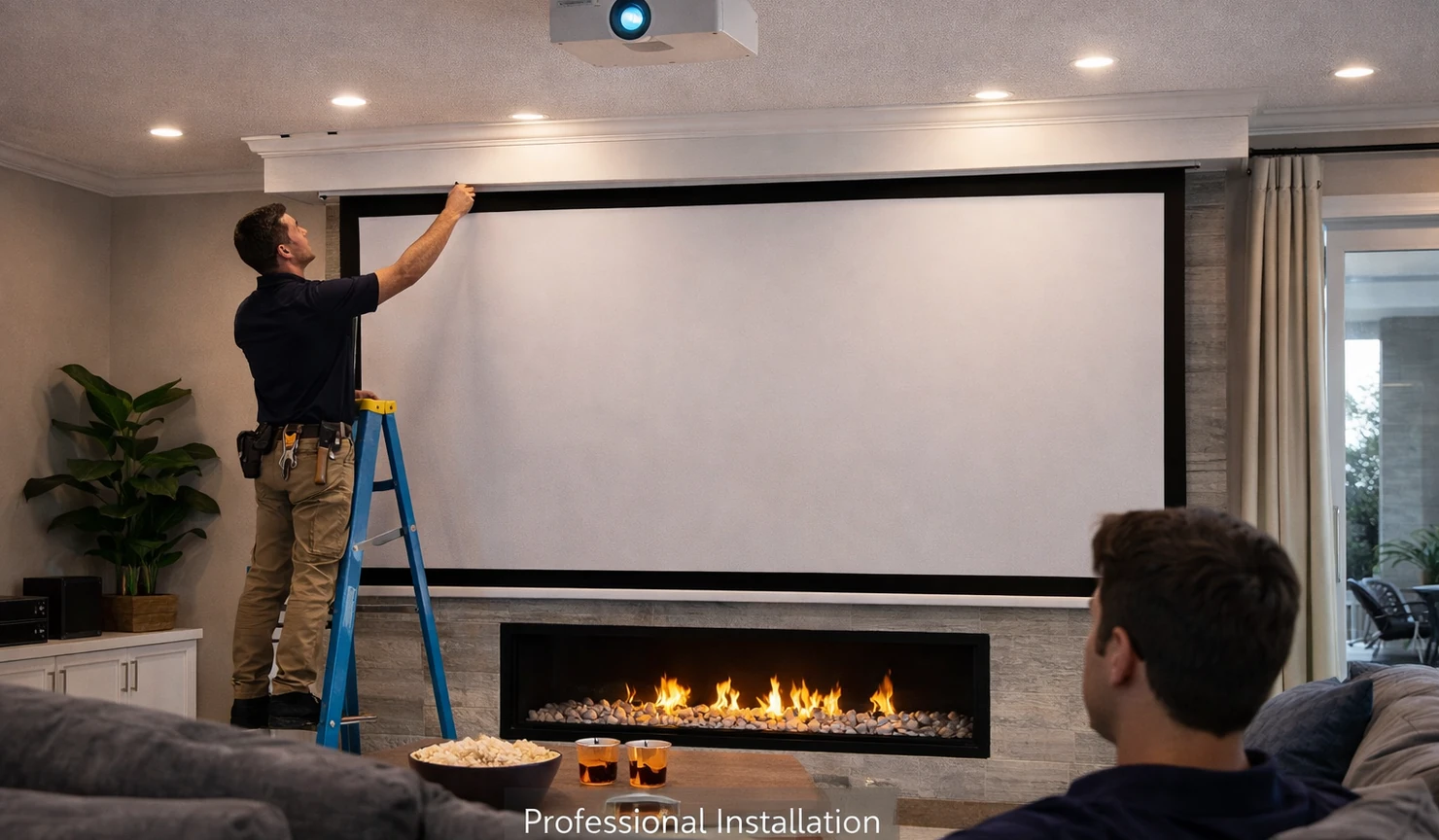
Some rooms are clearly dedicated theater spaces and call for a fixed-frame screen with a clean, permanent presence on the wall. Other rooms need flexibility because the screen shares space with everyday living, open-concept layouts, decorative finishes, or multipurpose furniture. In those rooms, a motorized or recessed screen may be the better fit. The real value of professional projector screen installation is knowing how to sort through those options in a practical way before anything is ordered, wired, framed, or mounted.
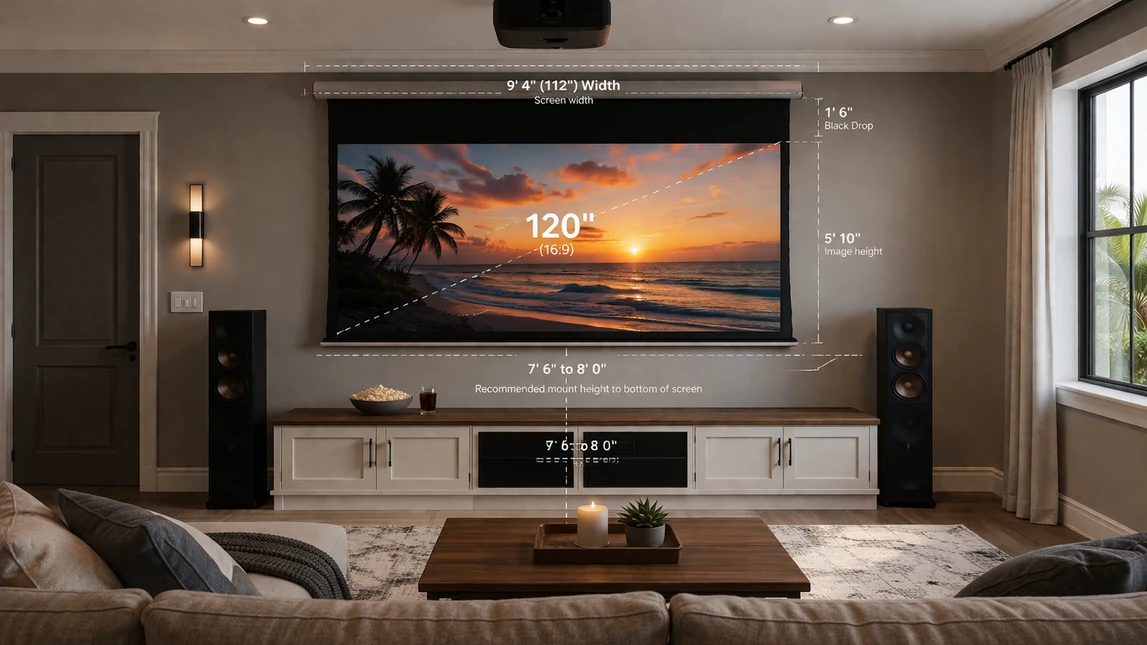
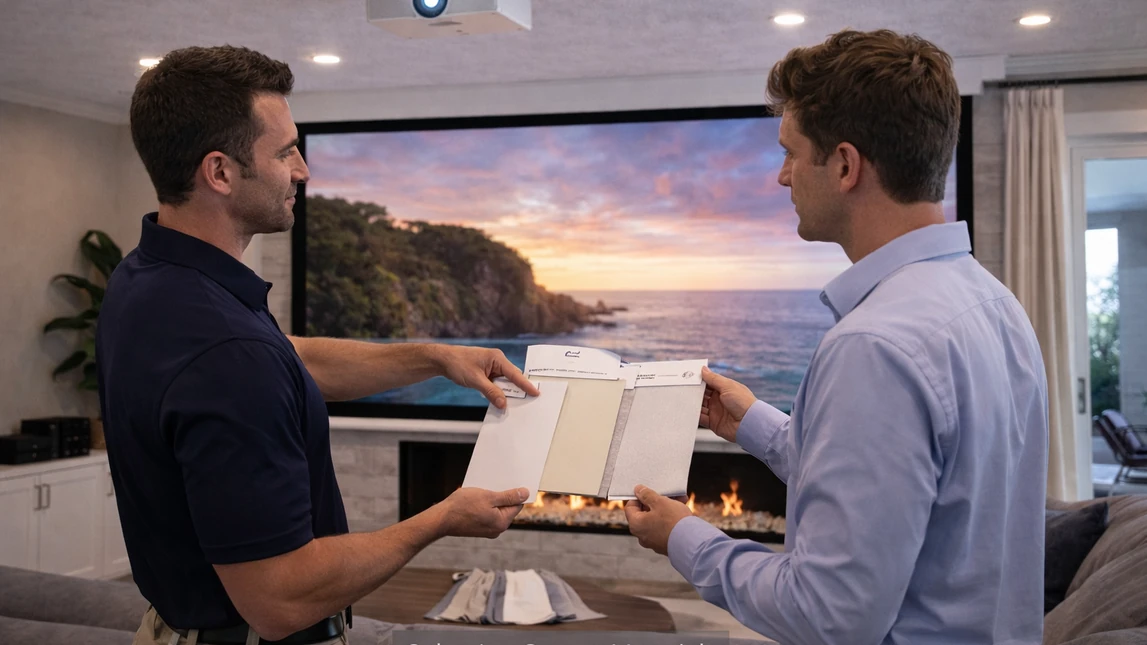
Good screen planning also protects picture quality. Screen size changes the viewing experience. Screen material changes how the image holds up against ambient light. Aspect ratio changes how movies, sports, and streaming content are presented. Even the physical placement of the screen affects comfort, neck position, image uniformity, and how well the projector can be aligned. When those decisions are made in isolation, homeowners often end up solving one problem while creating another.
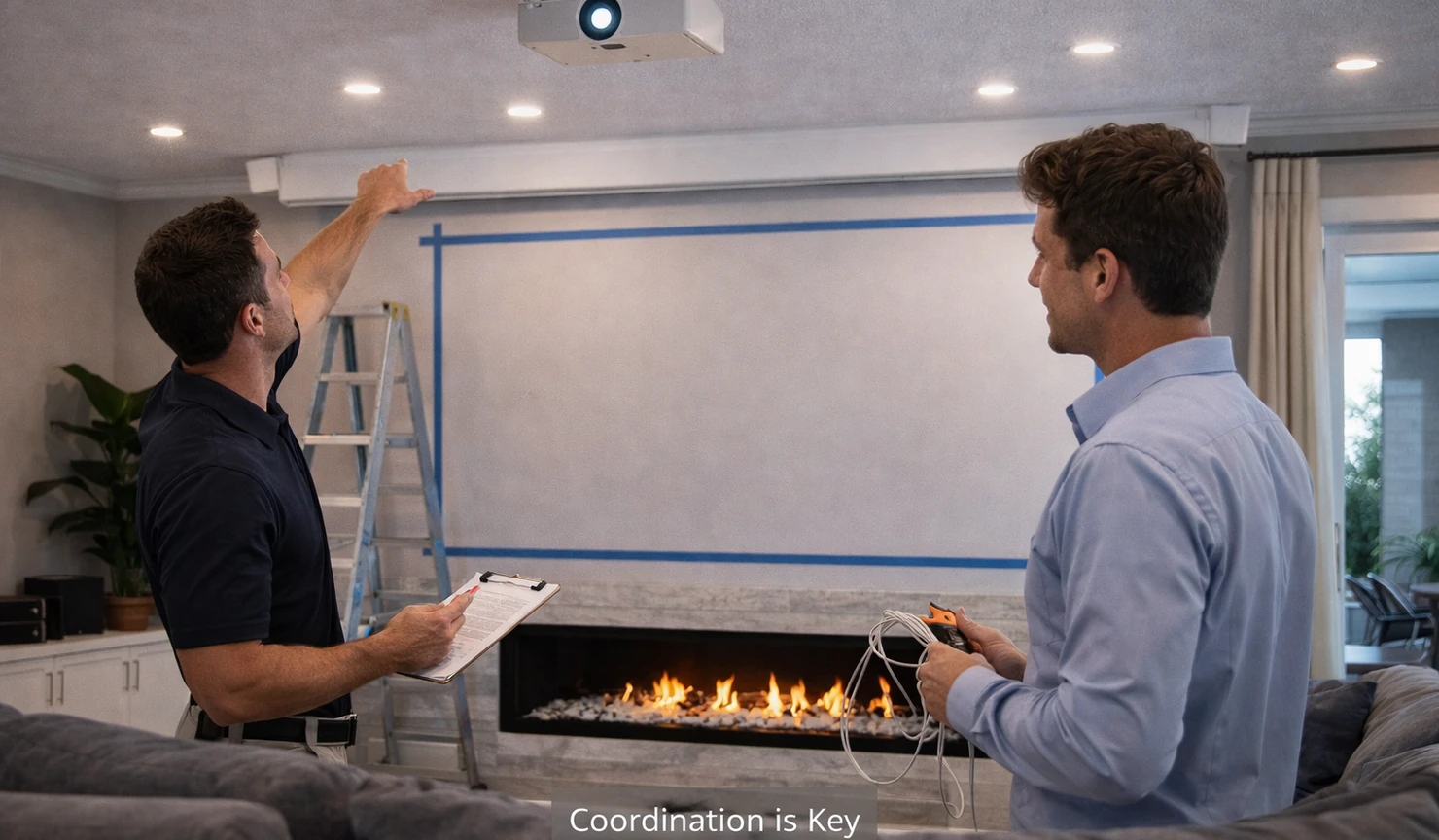
PBCAV approaches projector screen installation as part of a larger performance system. That means considering the intended projector, seating distance, speaker layout, wiring path, framing conditions, control needs, and the final visual appearance of the room. The goal is not to install the biggest screen possible. The goal is to install the right screen for the room so the finished experience feels balanced, deliberate, and satisfying every time it is used.
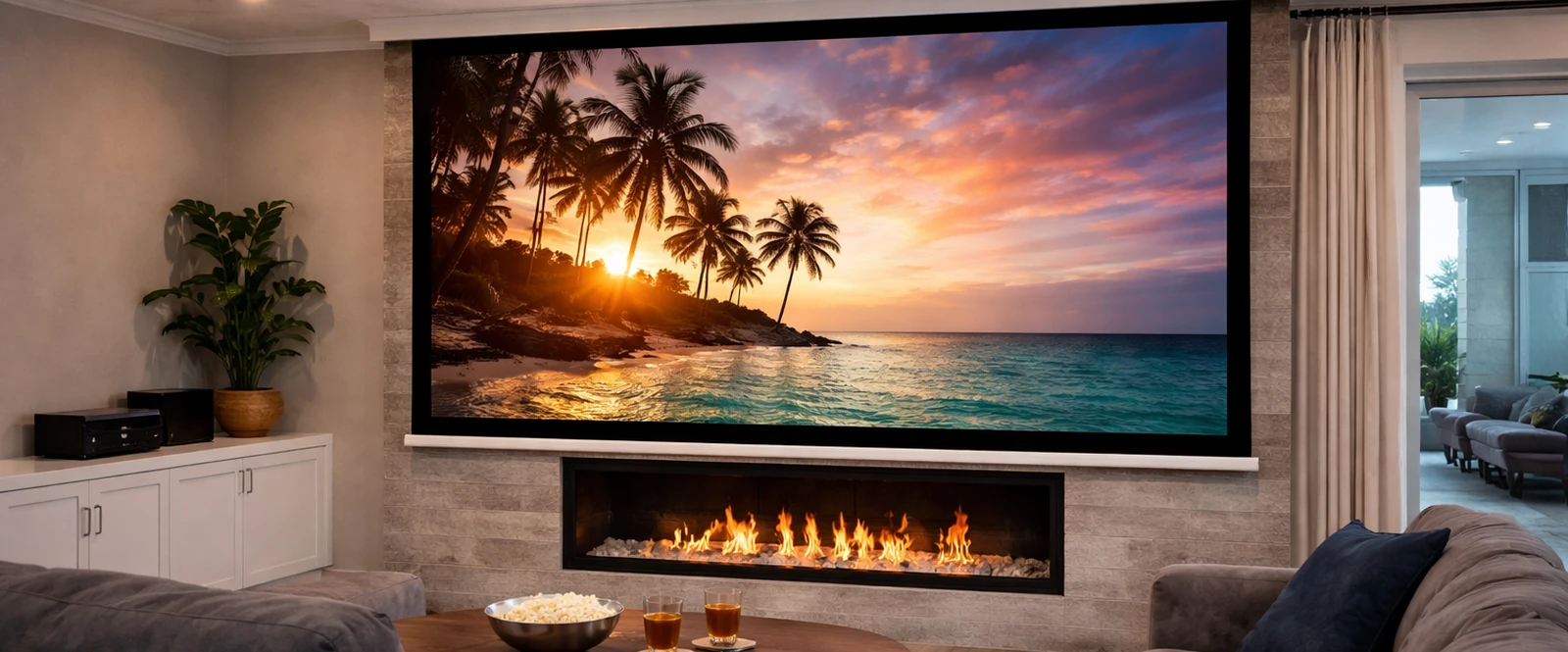
For homeowners who want a space that feels clean and complete rather than pieced together, that difference matters. A projector screen is one of the most visible elements in the room. It affects architecture, image performance, furniture placement, and usability all at once. When it is selected and installed correctly, it disappears into the experience. When it is handled poorly, it becomes the thing everyone notices for the wrong reasons.